
"natural environment"
7000 article(s) found

The pure taste environment of Colombian coffee makes the pure taste.
The pure taste of Colombian coffee comes from Colombia's natural environment with the most favorable conditions for coffee growth. But beyond that, it is inseparable from the hard work of local growers. In Colombia, the planting area of coffee has reached 1.07 million hectares, there are about 302000 coffee plantations in the country, and 30 to 40 percent of the rural population live directly.

Li Ning applies coffee carbon fiber technology to create the most environmentally friendly sportswear to turn waste into treasure.
Bamboo charcoal fiber and coconut carbon fiber have come into our lives, so can these coffee grounds also turn waste into treasure, reduce the burden on our environment, and produce a large number of high-quality raw materials at the same time? If so, the coffee in our hands must feel more mellow and delicious. The answer is yes. Coffee carbon fiber has been developed and applied.

The planting Environment of Nicaraguan Coffee Manor introduction to Los Congo Manor
The whole flavor is clean and sweet, with Kaddura sweet characteristics, bright and fresh green apple acid, a hint of rose tea, white grapefruit in the middle, clear and clean and pleasant taste. Huigan apple honey orange fruit is sweet, balanced and juicy, sweet after rhyme. Caturra Kaddura is a hot variety in recent years. It is a natural variety of bourbon and has been cultivated in Central and South America since 1950s. [manor]

Boutique Coffee Panamanian Coffee Variety Kaduai, Kaddura, 30% Rosa
Panamanian coffee originated in 1780, when European immigrants introduced the first Tipica tree species. Located in Central America, with the natural advantages of sunshine, land and mountains, coupled with a sufficient working population, the region is an excellent area for growing and producing high-quality boutique coffee, and it is a paradise for coffee. In particular, the Geisha coffee from Panama has led to the global customs.
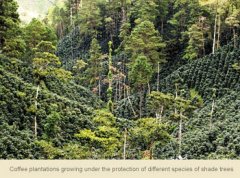
Guatemala Coffee planting Environment Guatemala Coffee cultivation
Faced with severe landscape changes and shrinking habitats, more than 90 species of migratory birds have found refuge in shaded trees. In early autumn (north temperate zone), birds such as Nashville warbler (Vermivoraruficapilla), wide-winged eagle (Buteo swordfish), crested flycatcher (Myiarchuscrinitus), lovely summer Donna Finch (Piranga bayberry), Raptors and others frequently shadow coffee.

Description of coffee flavor and flavor of Rosalio Flower Manor in Koban, Guatemala
For the exchange of professional baristas, please pay attention to the coffee workshop (official Wechat cafe_style) 552. the Coban producing area of Guatemala is located in Velapas province, 220km away from Guatemala City, with an average temperature of 15 ℃-20 ℃. This producing area is famous for its undamaged natural environment, where the natural environment is a type of climate. Coffee in the Koban producing area is planted in special rolling hills and grows symbiotically with the surrounding Rain Water natural trees.

Boutique coffee Panamanian coffee features introduction to Panamanian coffee
Panamanian coffee originated in 1780, when European immigrants introduced the first Tipica tree species. Located in Central America, with the natural advantages of sunshine, land and mountains, coupled with a sufficient working population, the region is an excellent area for growing and producing high-quality boutique coffee, and it is a paradise for coffee. In particular, the Geisha coffee from Panama has led to the global customs.
Boutique coffee Panamanian coffee manor Panamanian coffee producing area
Panamanian coffee originated in 1780, when European immigrants introduced the first Tipica tree species. Located in Central America, with the natural advantages of sunshine, land and mountains, coupled with a sufficient working population, the region is an excellent area for growing and producing high-quality boutique coffee, and it is a paradise for coffee. In particular, the Geisha coffee from Panama has led to the global customs.

Introduction to the growing environment and planting requirements of coffee trees
Growth environment and planting requirements of coffee beans | Natural environment and characteristics of coffee beans suitable for growth. Wen Honggang, coffee, Sichuan baristas club, Yunnan Yitian boutique coffee farm. Certified Coffee Certified Organic Coffee is grown without synthetic pesticides, herbicides or fertilizers, which helps keep healthy soil and groundwater pure. And coffee beans must also be certified organic workers.

Cuban Crystal Mountain Coffee beans are introduced, Cuban Crystal Mountain Coffee beans are boiled
Flavor and taste characteristics: full of particles, uniform taste, tobacco flavor the Republic of Cuba is located in the West Indies, with a detached and primitive natural environment, the beautiful Caribbean Sea and the world-famous Crystal Mountain Coffee. In 1748, coffee was introduced into Cuba from Domiga, and Cuba began to grow coffee ever since. The land in Cuba is fertile, the climate is humid, and Rain Water is abundant.
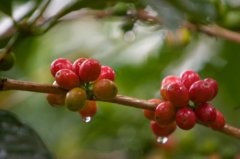
Current situation of Coffee in China Coffee growing Environment in Yunnan
The western and southern parts of Yunnan Province are located between 15o N and the Tropic of Cancer, most of which are 1000-2000 m above sea level. The topography is dominated by mountains and slopes, with large undulation, fertile soil, sufficient sunshine, rich rainfall and large temperature difference between day and night. These unique natural conditions form the flavor characteristics of Yunnan Arabica coffee with balanced aroma and moderate acidity. Coffee in Yunnan should be planted.

Elida Manor (Elida Natural) Pocket Alida Manor (Alida Manor)
The microclimate of the Panamanian highlands is the most important resource that makes Panamanian coffee unique. The most important resource that makes Panamanian coffee unique is its microclimate. The east-west environment of the Republic of Panama allows cold air to flow through the Central Mountains and converge above 6500 feet, creating a variety of microclimates in the Boquete and Volcn Candela regions.
The growing environment of Kona coffee
The quality of the fine Kona coffee is suitable for the right geographical location and climate. Coffee trees grow on the slopes of volcanoes, and their geographical location ensures the altitude needed for coffee to grow; dark volcanic ash soil provides the necessary minerals for coffee. This is probably due to the fact that Kona Island is rich in volcanic black mud with moderate acidity, rich mineral content and suitable water content.

Geographical Characteristics of Puerto Rico Coffee Growing Environment and Elevation
The Spanish-American War of 1889 ended in American victory, ending more than 400 years of Spanish rule over Puerto Rico. Demand for sugar increased dramatically in the United States, hurricanes destroyed most coffee plantations, and natural and man-made disasters hit Puerto Rico's coffee industry hard. Puerto Rico's national economy developed rapidly in the 20th century, with strong government support and indigenous
How to grow coffee in coffee growing environment Hawaiian low altitude coffee
The good quality of Kona coffee should be suitable for the right geographical location and climate. Coffee trees grow on the slopes of volcanoes, and their geographical location ensures the altitude needed for coffee to grow; the dark volcanic ash soil provides the necessary minerals for coffee. This is probably due to the fact that Kona Island is rich in volcanic black mud, which has moderate acidity, rich mineral content and high water content.

Jamaica Blue Mountain Coffee, a coffee producer with a superior growing environment.
The Blue Mountain plantations are mainly distributed in the mountains of the southwest of the country at an altitude of 800-1200 meters above sea level. According to the conditions of coffee cultivation and the climate type of high-quality planting area, the most suitable natural zone for coffee bean growth is the savanna belt. From the location of Starbucks headquarters in the materials, we can see that its layout should be dominated by the city.

A brief introduction to the market price of balanced and supple Brazilian boutique coffee beans
There are many large farms in Brazil, which run endless coffee plantations. They use machines to harvest and dry them. They are so efficient in automation that they regard coffee as a general agricultural material and completely abandon the flavor and flavor. As a result, many select coffee companies simply do not sell Brazilian beans so as not to demean themselves. In select coffee shops, Santos in Brazil still appears occasionally.

Introduction to the taste treatment method of region flavor description of Ethiopian coffee manor brand
Ethiopian coffee farm brand flavor description taste treatment method introduces that Ethiopian coffee beans grow in a close to natural environment, after years of planting under the same growth conditions, Ethiopian coffee beans have gradually adapted to the environment here. More than 60% of coffee beans are grown in forests or semi-forests. A village house that grows coffee in a large area.

Who is more advanced, Arabica or Robusta? The difference between Arabica Coffee and Robusta
Professional coffee knowledge exchange more coffee bean information please follow the coffee workshop (Wechat official account cafe_style) Front Street Coffee Guatemalan Coffee | Polsa Pacamara | Rosa 2018 Panamanian Emerald Manor Red Standard Sun | Blue Standard Water washing | Green Standard Sun I believe many friends have seen the news: Arabica is on the verge of extinction. The main idea of news is that it is made up of

The history and planting environment of Eincht Manor? What are the characteristics of Incht Manor in Guatemala?
Professional coffee knowledge exchange more coffee bean information please follow the coffee workshop (Wechat official account cafe_style) Eincht manor history and planting environment? What are the characteristics of Incht Manor in Guatemala? Eincht Manor has always been the pioneer of fine coffee in Central America. About 50 years ago, it was the first to focus on single variety and vertical integration to produce high-quality coffee.